Classic Buttery Shortbread (Just 4 Ingredients)
Affiliate disclosure: This article contains affiliate links. If you buy through them, we may earn a small commission at no extra cost to you. As an Amazon Associate I earn from qualifying purchases. Links go to Amazon search results for the product types we mention, not to specific products we have tested.
Good shortbread is all about butter. With only four ingredients, there's nowhere for anything to hide, which is exactly why it's worth getting the method right.
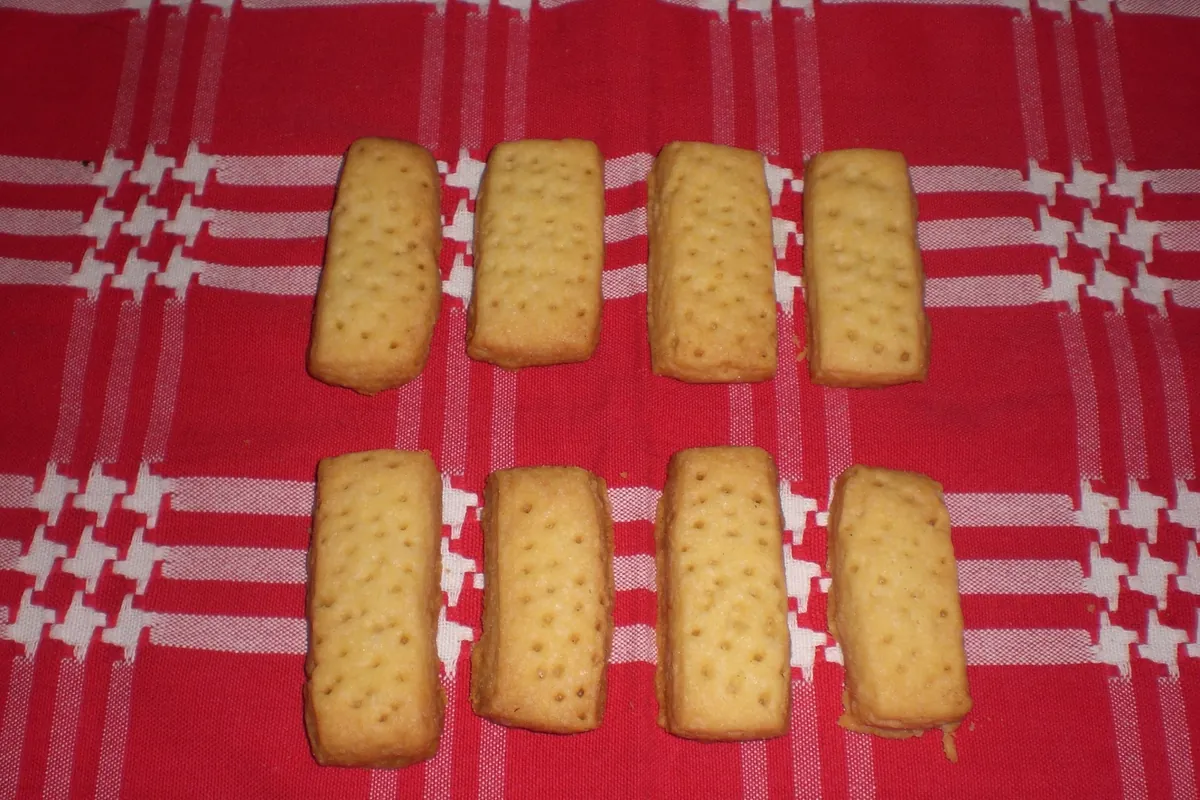
This classic shortbread is tender, sandy and rich, with a pale golden edge. It keeps well, travels well and is one of the easiest cookies to make ahead for holiday tins.
The classic ratio
Traditional shortbread follows a simple ratio by weight: roughly 1 part sugar, 2 parts butter, 3 parts flour. This recipe is close to that, with a pinch of salt and a little extra butter for tenderness.
Because the ratio matters, weighing the ingredients gives the most reliable result. If you use cups, spoon the flour into the cup and level it rather than scooping (see how to measure flour correctly).
Ingredients
Makes one 8-inch (20 cm) pan, cut into 16 fingers, or about 24 slice-and-bake rounds:
- 1 cup (226 g) unsalted butter, softened
- 1/2 cup (100 g) granulated sugar, plus extra for sprinkling
- 2 cups (250 g) all-purpose flour
- 1/4 tsp fine salt (use 1/2 tsp if you like a salty-sweet edge)
- 1 tsp vanilla extract (optional)
Instructions (pan shortbread)
- Heat the oven to 325°F (165°C). Line an 8-inch square pan with parchment, leaving an overhang so you can lift the shortbread out.
- Cream butter and sugar. Beat the butter and sugar for 1 to 2 minutes, until smooth and combined. Add vanilla if using.
- Add flour and salt. Mix on low just until the dough clumps together. It will look crumbly at first, then come together.
- Press into the pan. Press the dough into an even layer. A flat-bottomed glass helps smooth the top.
- Score and dock. Use a knife to lightly mark 16 fingers, then prick each one a few times with a fork. Docking lets steam escape so the shortbread bakes evenly.
- Chill the pan for 15 minutes. This helps the shortbread keep a neat edge.
- Bake for 30 to 40 minutes, until the edges are light golden and the center no longer looks wet. Shortbread should stay pale; it shouldn't brown all over.
- Cut while warm. Sprinkle with a little sugar and cut along the scored lines while it's still warm. Let it cool completely in the pan before lifting out. Warm shortbread is fragile.
Slice-and-bake rounds
- Make the dough as above, then shape it into a log about 2 inches (5 cm) across.
- Roll the log in coarse sugar if you like a sparkly edge. Wrap and chill for at least 2 hours, or freeze up to 3 months.
- Slice 1/3-inch (8 mm) rounds and place them on a parchment-lined sheet.
- Bake at 325°F (165°C) for 15 to 20 minutes, until the edges are just golden.
A sharp, thin knife gives the cleanest slices. Rotate the log a quarter turn after each slice so it stays round.
Why low and slow?
Shortbread bakes at a lower temperature than most cookies. That lets the center cook through before the outside browns, which keeps the flavor buttery rather than toasty and gives that sandy texture.
Holiday flavor variations
- Lemon: add 1 tbsp finely grated lemon zest.
- Chocolate-dipped: dip cooled fingers halfway into melted dark chocolate and let them set on parchment.
- Rosemary: add 1 tsp very finely chopped fresh rosemary for a savory-sweet cookie.
- Brown sugar: swap half the white sugar for light brown sugar for a caramel note.
- Cornstarch-tender: replace 1/4 cup (30 g) of the flour with cornstarch for an extra-delicate crumb.
Tips for the best shortbread
Use good butter. It's the main flavor. Any unsalted butter works, but a richer, higher-fat butter tastes noticeably more buttery.
Don't overmix. Once the flour goes in, mix only until combined. Overworking develops gluten and makes shortbread tough.
Keep it pale. Golden edges are good; a fully browned top tastes bitter and dry.
Let it cool. Shortbread firms up as it cools. Moving it while hot is the most common way to break it.
Handy tools: a square baking pan with straight sides, parchment paper, and a bench scraper for neat cuts.
Storing and gifting shortbread
Shortbread keeps well in an airtight tin at room temperature for up to 2 weeks. For gifts, layer the fingers with parchment in a tin or box. Chocolate-dipped shortbread is best within a week.
To freeze, wrap the baked shortbread well and freeze for up to 3 months. Thaw in its wrapping so condensation doesn't make it soft.
Cutting and shaping ideas
- Fingers: the classic shape for an 8-inch pan, 2 rows of 8.
- Petticoat tails (wedges): press the dough into a 9-inch round cake pan, score into 12 wedges and crimp the edge with a fork.
- Cut-outs: chill the dough, roll to 1/4 inch between parchment and cut small shapes. Bake at 325°F for 12 to 18 minutes.
- Stamped cookies: press a cookie stamp or the base of a patterned glass into slice-and-bake rounds before baking.
Small shapes bake much faster than a full pan, so watch them closely and pull them as soon as the edges turn pale gold.
Frequently asked questions
Why is my shortbread greasy?
The butter was too warm or melted when you mixed it. Use softened butter, not melted, and chill the dough before baking.
Can I use salted butter?
Yes. Leave out the added salt.
Why did my shortbread spread?
The dough was too warm. Chill it in the pan for 15 to 20 minutes before baking.
Can I use powdered sugar?
Yes. Use 3/4 cup (90 g) powdered sugar in place of the granulated sugar for a finer, more melt-in-the-mouth texture.