Soft and Chewy Snickerdoodle Cookies
Affiliate disclosure: This article contains affiliate links. If you buy through them, we may earn a small commission at no extra cost to you. As an Amazon Associate I earn from qualifying purchases. Links go to Amazon search results for the product types we mention, not to specific products we have tested.
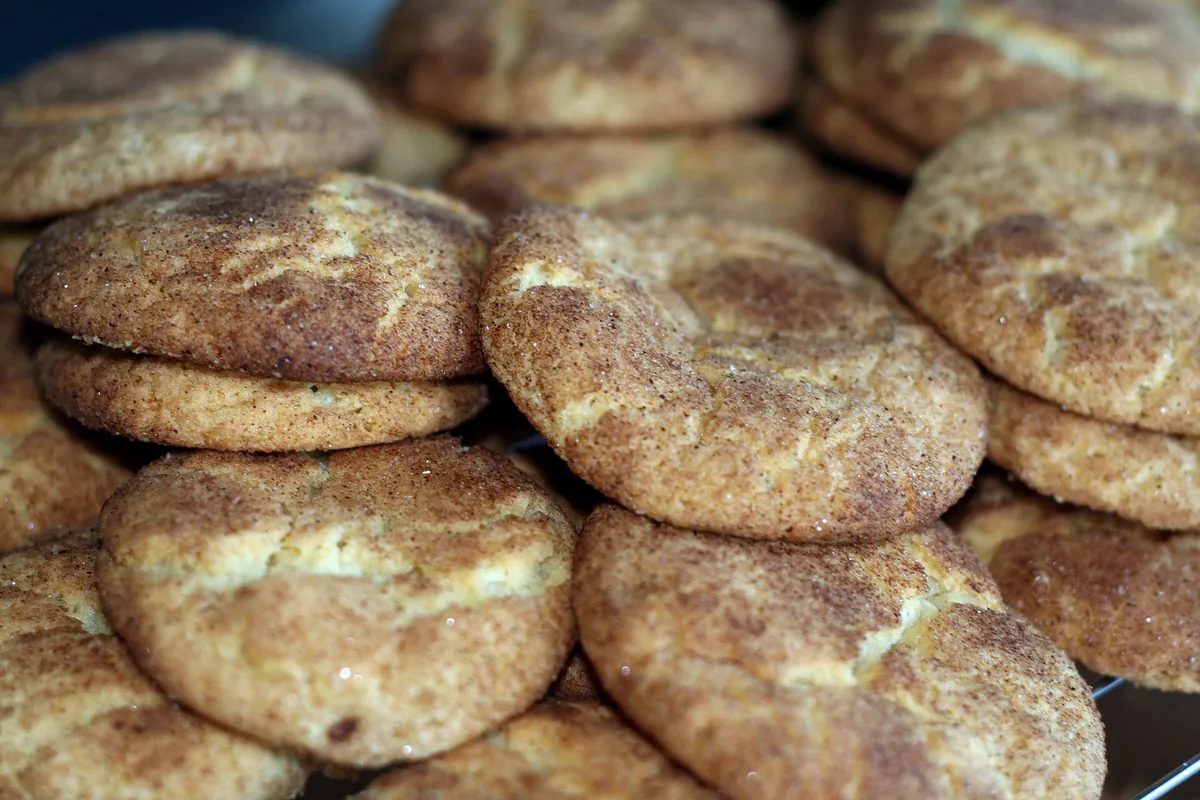
Snickerdoodles are simple cookies with a lot of personality: soft, chewy centers, crinkly tops and a coating of cinnamon sugar. Their signature tang comes from cream of tartar, which also gives them their pillowy texture.
They're quick to make, need no chilling if your kitchen is cool, and are a welcome change from chocolate on a holiday cookie plate.
What does cream of tartar do?
Cream of tartar is an acid. In snickerdoodles it works with baking soda to make the cookies rise, and it adds a gentle tang you can taste. It also helps keep the cookies soft.
If you don't have it, you can use 2 tsp baking powder in place of both the cream of tartar and baking soda. The cookies will still be good, but they'll taste more like a plain sugar cookie rolled in cinnamon sugar.
Ingredients
Makes about 24 cookies:
- 2 3/4 cups (345 g) all-purpose flour
- 2 tsp cream of tartar
- 1 tsp baking soda
- 1/2 tsp fine salt
- 1 cup (226 g) unsalted butter, softened
- 1 1/2 cups (300 g) granulated sugar
- 2 large eggs, room temperature
- 1 tsp vanilla extract
For rolling:
- 1/4 cup (50 g) granulated sugar
- 1 tbsp ground cinnamon
Instructions
- Heat the oven to 375°F (190°C). Line two baking sheets with parchment.
- Whisk the dry ingredients. Whisk the flour, cream of tartar, baking soda and salt in a bowl.
- Cream butter and sugar. Beat the butter and sugar on medium-high for 2 to 3 minutes, until pale and fluffy.
- Add eggs and vanilla. Beat in the eggs one at a time, then the vanilla.
- Add the dry ingredients. Mix on low until just combined. The dough should be soft but not sticky. If it's very soft, chill it for 30 minutes.
- Make the coating. Stir the sugar and cinnamon together in a small bowl.
- Shape. Scoop 1 1/2-tablespoon balls of dough, roll them smooth, then roll them in cinnamon sugar. Place them 2 inches apart.
- Bake for 8 to 10 minutes, until the edges are set and the centers are puffed and still look soft.
- Cool. Leave them on the pan for 5 minutes. They'll sink and crinkle as they cool. Then move them to a rack.
A cookie scoop keeps the balls the same size so they bake evenly.
The secret to soft snickerdoodles
Take them out early. Snickerdoodles should come out of the oven when the centers still look a little underdone. They finish setting on the hot pan and stay soft for days. If they look fully baked in the oven, they'll be crisp once cool.
Tips for thick, crinkly cookies
Cream well. Unlike chewy chocolate chip cookies made with melted butter, snickerdoodles benefit from creaming. The air helps give them their puffy, crinkly tops.
Chill if your kitchen is warm. Warm dough spreads thin. Thirty minutes in the fridge makes a big difference.
Roll generously. A thick coat of cinnamon sugar gives the crackly crust. Roll each ball twice if you like.
Use light-colored pans. Dark pans brown the bottoms faster. Light aluminum baking sheets with parchment give even results.
Holiday variations
- Brown butter snickerdoodles: brown the butter, chill it until solid but soft, then use as normal.
- Chai spice: add 1/2 tsp each ground ginger and cardamom and a pinch of cloves to the cinnamon sugar.
- Eggnog-inspired: add 1/4 tsp ground nutmeg to the dough and the coating.
- Sandwich cookies: fill two cookies with a little cinnamon buttercream.
Make-ahead and storage
- Dough: scoop and roll the balls (without the coating), freeze on a tray, then move to a freezer bag for up to 3 months. Roll the frozen balls in cinnamon sugar and bake, adding 1 to 2 minutes.
- Baked cookies: keep in an airtight container at room temperature for up to 5 days.
- Freezing baked cookies: freeze in a single layer, then stack in a container for up to 3 months.
Troubleshooting
- Flat cookies: butter too soft, dough too warm, or old baking soda. Chill the dough and check your leavening.
- Cakey cookies: too much flour. Spoon and level the flour, or weigh it.
- No tang: cream of tartar was left out or replaced with baking powder.
- Hard cookies: overbaked. Pull them when the centers still look soft.
Why the cookies crinkle
Snickerdoodles puff up in the oven, then fall slightly as they cool. As the soft center sinks, the cinnamon sugar crust on top cracks into the classic crinkled pattern. That's why underbaking slightly matters: a fully set cookie doesn't fall, so it stays smooth and dry.
The baking soda and cream of tartar react quickly once they're wet, so bake the dough within a few hours of mixing, or freeze it. Dough left in the fridge for several days can lose some of its puff.
Frequently asked questions
What's the difference between a snickerdoodle and a sugar cookie?
Snickerdoodles use cream of tartar for a tangy flavor and chewy texture, and they're rolled in cinnamon sugar.
Can I make snickerdoodles without cream of tartar?
Yes. Use 2 tsp baking powder instead of the cream of tartar and baking soda. They'll be softer and less tangy.
Why did my snickerdoodles crack so much?
Some cracking is normal and part of the look. Very deep cracks usually mean the dough was a little dry from too much flour.
Can I use all brown sugar?
It's not traditional. Brown sugar makes a darker, more caramel-flavored cookie with fewer crinkles.
Read next: All-Butter Pie Crust (Flaky, Easy and Make-Ahead) →