How to Measure Flour Correctly (and Why It Changes Everything)
Affiliate disclosure: This article contains affiliate links. If you buy through them, we may earn a small commission at no extra cost to you. As an Amazon Associate I earn from qualifying purchases. Links go to Amazon search results for the product types we mention, not to specific products we have tested.
If your cookies come out dry, your cake is dense or your bread is tough, the recipe may not be the problem. The most common baking mistake is simply using too much flour.
This guide covers how to measure flour correctly, why weighing is easier than it sounds, and a few other baking basics that make the biggest difference: oven temperature, ingredient temperature and how to measure everything else.
Why scooping flour adds too much
When you dip a measuring cup straight into the flour bag, the cup packs the flour down. You can end up with noticeably more flour than the recipe writer intended, often 20 to 30 percent more.
In cookies, that means thick, dry cookies that don't spread. In cakes, a dense, dry crumb. In bread, a stiff dough that rises poorly.
The spoon-and-level method
If you use measuring cups, use this method:
- Fluff the flour in the bag or container with a spoon. Flour settles over time.
- Spoon it into the cup until it's heaped above the rim. Don't shake or tap the cup.
- Level it off with the straight edge of a knife.
Done this way, a cup of all-purpose flour weighs roughly 120 to 125 grams. Recipe writers use slightly different numbers, so if a recipe gives grams, use their weight.
Why weighing is easier (and more accurate)
A digital kitchen scale removes the guesswork. It's also faster and means fewer dishes:
- Put your bowl on the scale and press "tare" or "zero".
- Add flour until you reach the weight in the recipe.
- Press tare again and add the next ingredient.
Weighing matters most for bread, cakes and delicate pastry like pie crust, where small differences change the texture.
Useful weights for common ingredients
These are common approximate values. When a recipe gives its own weights, follow those.
- All-purpose flour: about 120 to 125 g per cup (spooned and leveled)
- Bread flour: about 125 to 130 g per cup
- Granulated sugar: about 200 g per cup
- Packed brown sugar: about 200 to 215 g per cup
- Powdered sugar: about 120 g per cup
- Butter: 1 cup = 226 g (2 US sticks; 1 stick = 113 g)
- Unsweetened cocoa powder: about 85 to 90 g per cup
Measuring other ingredients
Brown sugar is the exception to "don't pack": press it firmly into the cup unless the recipe says otherwise.
Liquids go in a clear liquid measuring cup. Set it on the counter and read at eye level.
Baking soda, baking powder and salt should be leveled off. A heaping teaspoon of baking soda can make baked goods taste soapy.
Sticky ingredients like honey or molasses slide out more easily if you lightly oil the cup first.
Check your oven temperature
Many home ovens run hotter or cooler than the dial says. If your bakes are consistently overbrowned or underbaked, an inexpensive oven thermometer will tell you.
- Hang it in the center of the oven.
- Preheat for at least 15 to 20 minutes, then check the reading.
- Adjust the dial up or down to match the temperature the recipe needs.
Also remember that dark metal pans brown faster than light ones, and glass holds heat. Some bakers lower the temperature by about 25°F (15°C) for glass or dark pans, especially for longer bakes.
Room temperature ingredients
Many recipes ask for "room temperature" butter, eggs and milk. Here's what that means and why it matters:
- Softened butter should be about 65°F (18°C): it dents when pressed but isn't shiny or greasy. Butter that's too warm makes cookies spread.
- Eggs mix more evenly when they're not fridge-cold. Put them in a bowl of warm tap water for 10 minutes.
- Milk can be warmed briefly in the microwave so it doesn't chill the batter.
Some recipes, like pie crust and cut-out cookies, need ingredients cold. Always follow the recipe.
Quick troubleshooting guide
- Cookies don't spread, are dry or cakey: too much flour.
- Cookies spread too much: butter too warm, dough not chilled, or too little flour.
- Cake is dense or dry: too much flour or overbaked.
- Cake sank in the middle: underbaked, oven door opened too early, or old leavening.
- Bread is heavy: too much flour or not enough rising time.
- Bottoms are dark: oven runs hot, dark pans, or baked too low.
Measuring butter and eggs
Butter: in the US, a stick is 1/2 cup (113 g), with tablespoon marks on the wrapper. Elsewhere, butter is often sold in blocks, so a scale is the easiest way to measure it.
Eggs: recipes usually mean large eggs, about 50 g each without the shell. If you only have medium or extra-large eggs, you can whisk them and weigh out the amount you need. This matters most in cakes and custards, where too much or too little egg changes the texture.
Frequently asked questions
Do I need to sift flour?
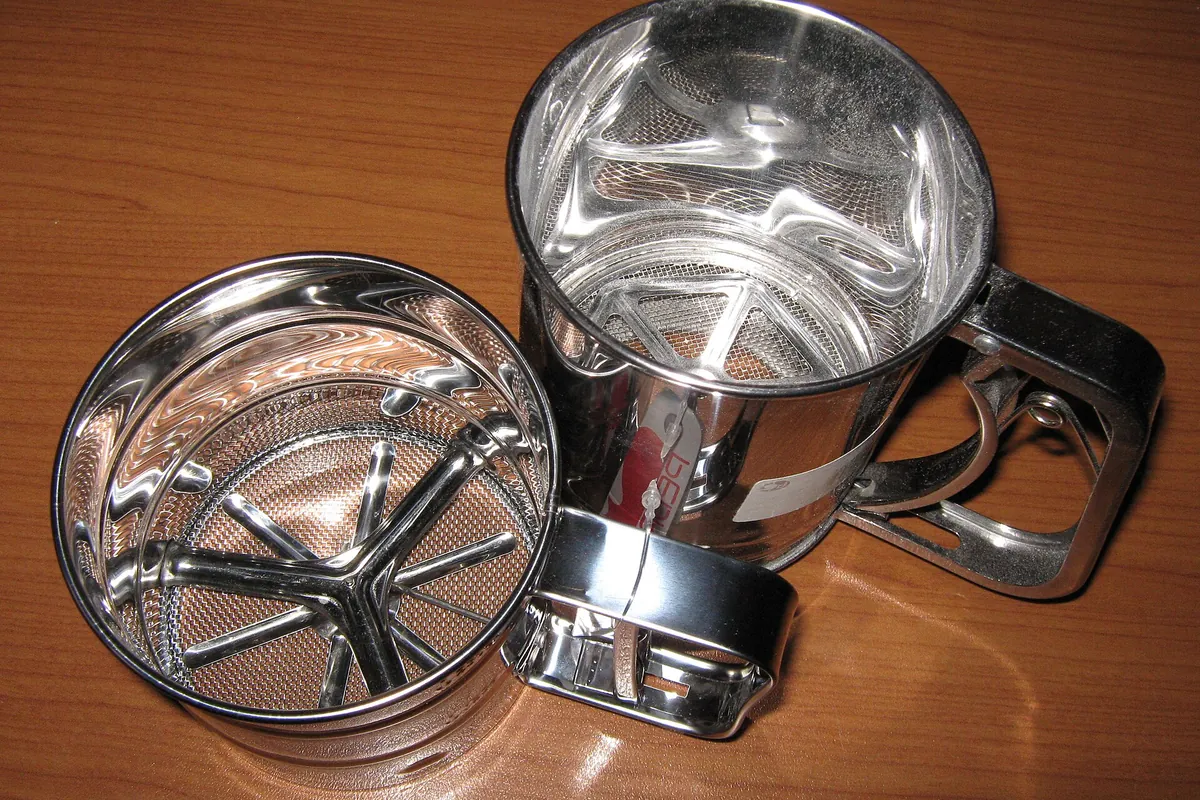
Usually not, unless the recipe says so. Whisking dry ingredients together does a similar job of removing lumps.
Is a kitchen scale worth it for a beginner?
Yes. It's one of the cheapest ways to get more consistent results, and it makes cleanup quicker.
Can I convert any recipe to grams?
You can use approximate weights, but the most reliable approach is a recipe that was written with weights.
How do I know if my baking powder is still good?
Stir 1/2 tsp into a little hot water. If it bubbles actively, it's fine. For baking soda, add a splash of vinegar instead.
Read next: Holiday Baking Timeline: What to Make Ahead and When →