Classic Pumpkin Pie (Smooth, No-Crack Filling)
Affiliate disclosure: This article contains affiliate links. If you buy through them, we may earn a small commission at no extra cost to you. As an Amazon Associate I earn from qualifying purchases. Links go to Amazon search results for the product types we mention, not to specific products we have tested.
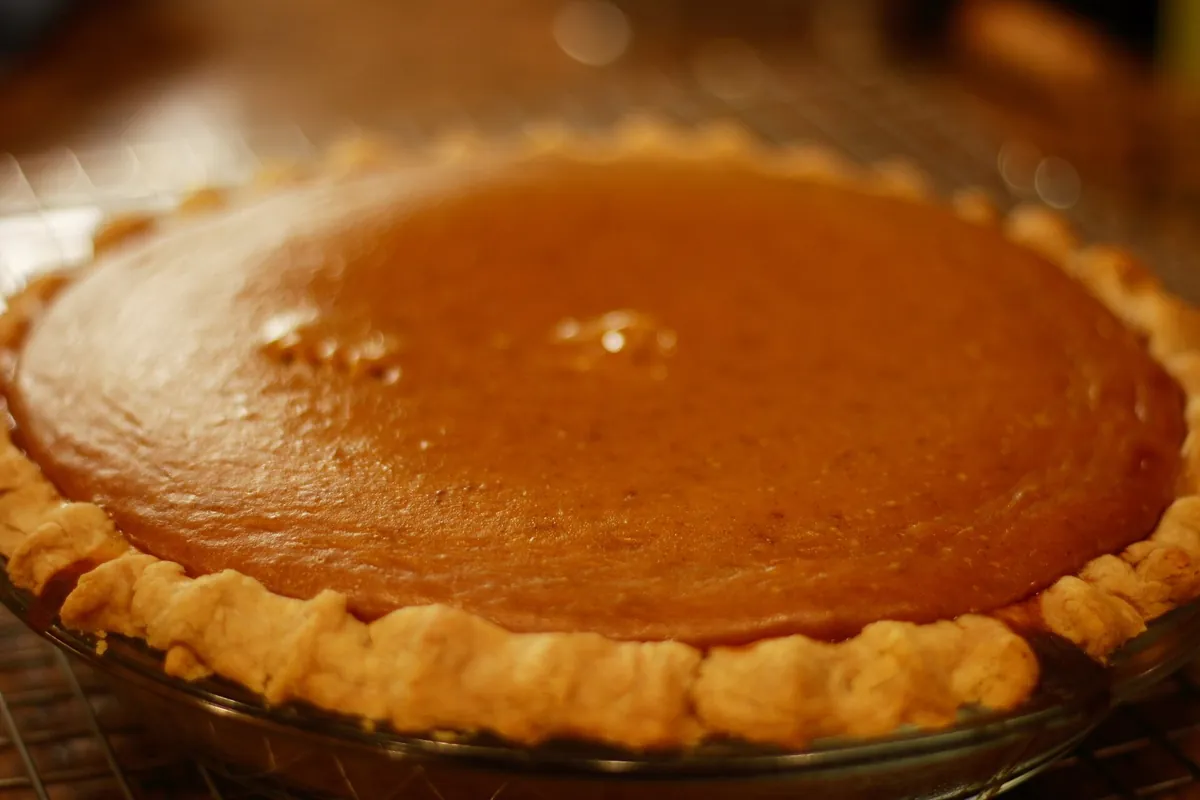
Pumpkin pie is a custard pie: pumpkin, eggs, milk and spices baked until just set. That's why the two most common problems, a cracked top and a soggy crust, come down to temperature and timing rather than the recipe itself.
This classic version has a smooth, creamy filling with warm spice. It's best made a day ahead, which also frees up your oven on Thanksgiving.
Ingredients
Makes one 9-inch pie (8 slices):
- 1 single all-butter pie crust, or a store-bought crust
- 1 can (15 oz / 425 g) pumpkin puree (not pumpkin pie filling)
- 3/4 cup (150 g) packed light brown sugar
- 2 large eggs plus 1 egg yolk
- 1 can (12 oz / 354 ml) evaporated milk
- 1 1/2 tsp ground cinnamon
- 1 tsp ground ginger
- 1/4 tsp ground nutmeg
- 1/8 tsp ground cloves
- 1/2 tsp fine salt
- 1 tsp vanilla extract
Instructions
- Partly blind bake the crust. Fit the crust into a 9-inch pie dish, crimp and chill. Blind bake at 400°F (200°C) with pie weights for 15 to 20 minutes, remove the weights, then bake 5 more minutes until the bottom looks dry. This keeps the bottom from turning soggy under the wet filling.
- Lower the oven to 350°F (175°C).
- Mix the filling. Whisk the pumpkin, brown sugar, eggs and yolk until smooth. Whisk in the evaporated milk, spices, salt and vanilla.
- Fill. Place the warm crust on a baking sheet (easier to move and catches drips). Pour in the filling.
- Bake for 45 to 60 minutes, until the edges are set and the center still jiggles slightly, like set gelatin, when you nudge the pan. If you use a thermometer, the center should read about 175°F (80°C).
- Cool slowly. Cool on a rack for at least 2 hours. The center finishes setting as it cools.
- Refrigerate. Once cool, cover and refrigerate. Pumpkin pie contains eggs and milk, so it should be stored in the fridge.
How to avoid cracks
Cracks happen when the filling is overbaked or cools too fast. The proteins in the eggs tighten and split the surface.
- Take it out while the center still wobbles. This is the most important tip.
- Use a moderate oven. 350°F bakes the custard gently.
- Cool at room temperature before refrigerating, away from drafts.
If a crack appears anyway, whipped cream covers it beautifully.
An instant-read thermometer takes the guesswork out of "is it done?", and a glass pie dish lets you check that the bottom crust is golden.
Spice and flavor variations
- Pumpkin pie spice: replace all the individual spices with 2 1/2 tsp pumpkin pie spice.
- Maple: replace 1/4 cup of the brown sugar with pure maple syrup.
- Extra silky: use 1 cup heavy cream and 1/2 cup whole milk instead of evaporated milk.
- Gingersnap crust: press 1 1/2 cups gingersnap crumbs with 5 tbsp melted butter into the dish and bake 10 minutes at 350°F before filling.
Make-ahead timeline
- Up to 2 days ahead: make the crust dough.
- 1 day ahead: bake the pie. Cool, cover and refrigerate. The flavor and texture are often better the next day.
- Serving day: take it out of the fridge about 30 minutes before serving, or serve chilled.
Pumpkin pie keeps in the fridge for 3 to 4 days. You can freeze it, well wrapped, for up to 1 month; thaw overnight in the fridge. The crust may soften a little.
Serving ideas
- Lightly sweetened whipped cream with a pinch of cinnamon
- A drizzle of maple syrup
- Toasted, chopped pecans for crunch
If you're planning a whole holiday menu, our Thanksgiving baking timeline helps you spread the work across the week.
Troubleshooting
- Soggy bottom crust: the crust wasn't blind baked, or the pie baked too high in the oven.
- Watery filling: underbaked. The center should only jiggle slightly.
- Filling separated or weeping: overbaked. Pull it sooner next time.
- Edges burning: cover the crust edge with foil strips after the first 20 to 25 minutes.
Choosing a pie dish
A standard 9-inch pie dish (not deep-dish) holds this filling with a little room to spare. If you use a deep-dish pan, the pie will need extra baking time, often 10 to 15 minutes more, and the filling will look shallower.
Glass dishes are helpful because you can see the color of the bottom crust. Metal pans brown quickly and evenly. Thick ceramic dishes look lovely but heat more slowly, so the bottom crust can stay pale.
If you have filling left over, bake it in a small greased ramekin alongside the pie. It makes a crustless pumpkin custard and sets in about 25 to 35 minutes.
Frequently asked questions
Can I use fresh pumpkin?
Yes, but roast and puree a sugar (pie) pumpkin, then drain it in a sieve until it's as thick as canned puree. Watery puree makes a loose filling.
What's the difference between pumpkin puree and pumpkin pie filling?
Puree is plain cooked pumpkin. Pie filling already has sugar and spices. This recipe needs plain puree.
Does pumpkin pie need to be refrigerated?
Yes. Because it's an egg and milk custard, store it in the fridge once it has cooled.
Why is there a gap between the filling and crust?
The filling shrinks slightly as it cools. A gentler bake and slower cooling keep this to a minimum.
Read next: Classic Apple Pie From Scratch (Juicy, Not Runny) →