Christmas Bread Recipe for Gifts (Easy Braided Yeast Bread)
Affiliate disclosure: This article contains affiliate links. If you buy through them, we may earn a small commission at no extra cost to you. As an Amazon Associate I earn from qualifying purchases. Links go to Amazon search results for the product types we mention, not to specific products we have tested.
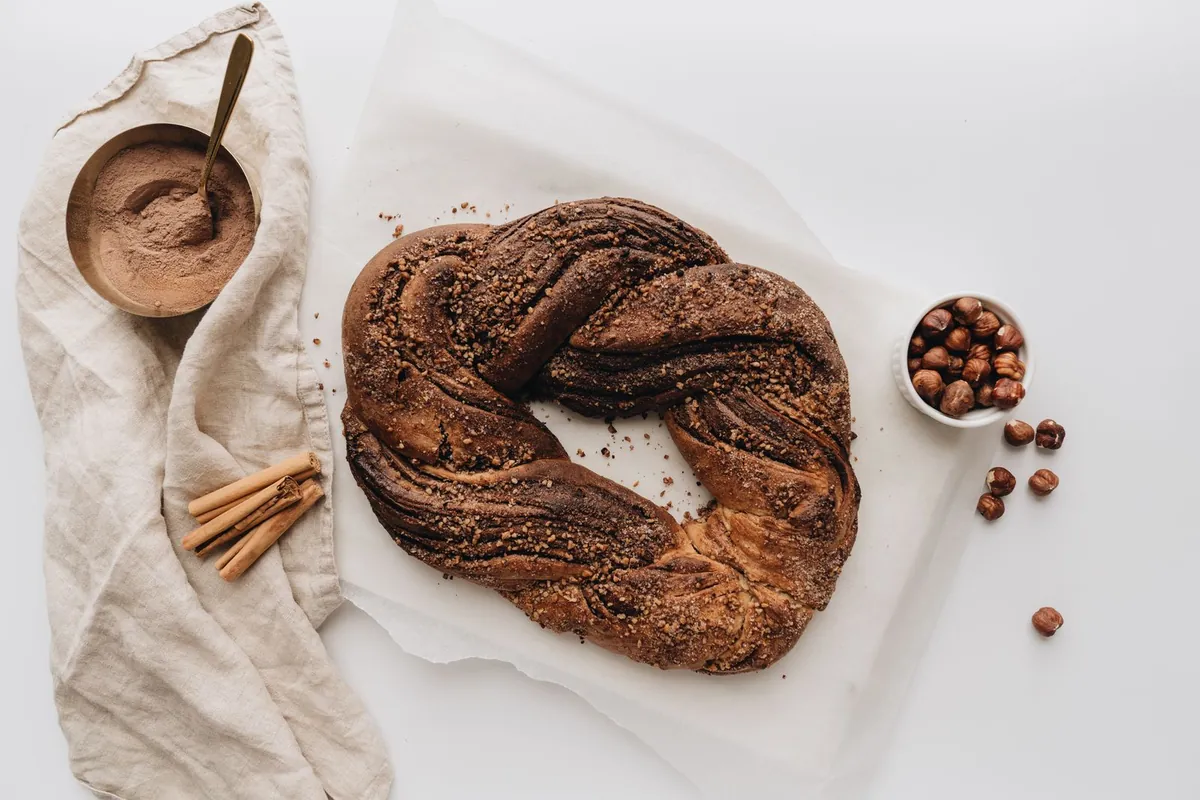
A warm, braided loaf on the table on Christmas morning, or wrapped in parchment and twine for a neighbor, is hard to beat. This Christmas bread recipe makes a soft, lightly sweet yeast bread flavored with orange zest and cardamom, braided into a wreath or shaped into mini loaves for gifting.
It uses a classic enriched-dough method (flour, milk, butter, egg, sugar and yeast), so it's friendly to beginners. If you've made easy no-knead bread, you already know the basics of yeast; this dough just adds butter, egg and a braid. The orange-cardamom flavoring is our variation on the classic formula, so watch the dough rather than the clock.
Ingredients
Makes 1 large wreath or 3 to 4 mini loaves:
Dough
- 500 g (about 4 cups) all-purpose or bread flour, spooned and leveled
- 60 g (⅓ cup) granulated sugar
- 7 g (2¼ tsp) instant or active dry yeast
- 1 tsp fine salt
- 1 tsp ground cardamom
- Finely grated zest of 1 orange
- 240 ml (1 cup) lukewarm milk
- 1 large egg, at room temperature
- 60 g (4 tbsp) unsalted butter, softened
Egg wash
- 1 large egg beaten with 1 tbsp milk
Orange glaze
- 120 g (1 cup) powdered sugar
- 2 to 3 tbsp orange juice
Instant vs active dry yeast
Both work. Instant yeast can be mixed directly with the flour. Active dry yeast is traditionally dissolved in the warm milk with a pinch of sugar first and left for 5 to 10 minutes until foamy, which also confirms it's alive. Use the same amount of either in this recipe; active dry may rise a little more slowly.
Enriched dough basics
An enriched dough contains fat, sugar, eggs or dairy. These make bread softer and richer but slow the yeast and make the dough stickier at first. Two tips:
- Be patient with kneading. The dough will start sticky and become smooth and elastic as gluten develops. Resist adding lots of extra flour.
- Expect slower rises. Enriched doughs can take longer than lean bread doughs, especially in a cool kitchen.
Equipment
- A large mixing bowl, or a stand mixer with a dough hook
- A kitchen scale (recommended)
- A rimmed baking sheet and parchment paper
- A pastry brush for the egg wash
- A bench scraper or sharp knife for dividing dough
- An instant-read thermometer (helpful)
- Mini loaf pans, if you're making gift loaves
A stand mixer makes kneading enriched dough easier but isn't required.
Step-by-step instructions
Make the dough
- Whisk the flour, sugar, yeast (if instant), salt, cardamom and orange zest in a large bowl.
- Add the lukewarm milk (with dissolved yeast, if using active dry) and the egg. Mix into a shaggy dough.
- Add the softened butter a piece at a time, working it in.
- Knead by hand for 10 to 12 minutes, or with a dough hook on low-medium speed for 6 to 8 minutes, until the dough is smooth, elastic and only slightly tacky.
First rise
Shape the dough into a ball, place it in a lightly greased bowl and cover. Let it rise in a warm spot until roughly doubled, usually 1 to 2 hours depending on your kitchen. Press a floured finger into the dough: if the dent springs back slowly and only partly, it's ready.
Braid into a wreath
- Turn the dough out and press out the air gently.
- Divide it into three equal pieces (weigh them for an even braid).
- Roll each into a rope about 24 inches (60 cm) long.
- Lay the ropes side by side, pinch them together at one end and braid loosely: right over center, left over center, repeat.
- Bring the ends together to form a ring and pinch or tuck them under to hide the join.
- Move the wreath to a parchment-lined baking sheet.
For mini loaves: divide the dough into 3 or 4 pieces, divide each into three small ropes, braid and tuck into greased mini loaf pans.
Second rise
Cover loosely and let the shaped bread rise until visibly puffy, about 45 minutes to 1 hour. Meanwhile, heat the oven to 350°F (175°C).
Bake and glaze
- Beat the extra egg with a splash of milk and brush it over the bread.
- Bake until deep golden. A large wreath usually takes about 25 to 35 minutes; mini loaves often take less. If it browns too quickly, tent loosely with foil.
- Check doneness: many bakers aim for an internal temperature of about 190°F (88°C) for enriched bread, and the bottom should sound hollow when tapped.
- Cool for at least 20 minutes, then drizzle with the orange glaze.
Christmas breads from around the world
Stollen
A German Christmas bread, especially associated with Dresden. Stollen is a dense, buttery yeast bread filled with dried fruit and candied peel, often with a marzipan center, then brushed with butter and covered in powdered sugar. It's traditionally made ahead and keeps well.
Panettone (Italian)
The tall, domed sweet bread from Milan, studded with candied citrus and raisins. Traditional panettone uses a natural leaven and a long, multi-day process, which gives it a very light, airy texture. Home versions often use commercial yeast to simplify things.
Pulla / Julekake
Finnish pulla is a soft braided bread flavored with cardamom and often topped with pearl sugar; it's eaten year-round but is a holiday favorite. Norwegian julekake is a Christmas loaf with cardamom, raisins and candied fruit. Our orange-cardamom wreath is inspired by these Nordic breads.
Savory Christmas breads
Not everyone wants sweet bread. Savory options include braided herb and garlic breads, cheese-filled wreaths and pull-apart rolls shaped like a Christmas tree. Our soft dinner rolls can be arranged in a tree shape on a baking sheet for a festive table.
Wrapping Christmas bread as a gift
- Cool completely before wrapping, or condensation will make the crust soggy.
- Glaze close to giving so it doesn't smear, or pack the glaze in a small jar for the recipient.
- Wrap in parchment and tie with baker's twine, then slip into a cellophane or bread bag for freshness.
- Bake mini loaves in paper loaf pans so they're ready to give.
- Add a tag with the bread's name, the date baked, storage notes and allergens (wheat, milk, egg).
For more homemade gift ideas, see our edible Christmas gifts; our holiday baking gift basket ideas show how to build a bread baker's basket.
Shop bread bags and baker's twine on Amazon
Make-ahead, storage and freezing
Keeping it soft
- Store cooled bread in an airtight bag or container at room temperature for 2 to 3 days.
- Avoid the fridge, which makes bread stale faster.
- Refresh day-old bread in a warm oven for a few minutes, or toast slices.
Freezing
- Freeze the baked, unglazed wreath or loaves wrapped tightly in plastic wrap and then foil or a freezer bag.
- Thaw at room temperature in the wrapping, then warm briefly in the oven and glaze.
- For the best flavor, use frozen bread within about a month.
Overnight option: after kneading, cover the dough and refrigerate it for the first rise overnight. Let it warm slightly the next morning, shape and do the second rise (it may take longer when the dough starts cold).
Frequently asked questions
What is a traditional Christmas bread?
It depends on the country. Germany has stollen, Italy has panettone and pandoro, Finland has cardamom pulla and Norway has julekake. Many families also bake braided sweet breads or wreaths. Most are enriched yeast breads with butter, eggs and sugar, often with dried fruit, citrus or spices.
Can I make Christmas bread in a bread machine?
Yes, for the dough. Add the ingredients in the order your machine's manual recommends and use the dough cycle. Then remove the dough, braid it by hand, let it rise and bake it in the oven. This keeps the braided shape while letting the machine do the kneading.
How do I know when enriched bread is baked?
Look for an even, deep golden-brown color, a hollow sound when you tap the bottom, and an internal temperature of around 190°F (88°C) on an instant-read thermometer. Enriched dough browns quickly because of the sugar and egg, so tent with foil if needed.
Recipe notes
- Weigh the flour for the best results; see how to measure flour correctly.
- Add up to 75 g of chopped dried cranberries or candied orange peel with the butter if you like.
- Contains wheat, milk and egg.
About the author: This recipe was written by the Warm Oven Bakes Editorial Team using established enriched-dough technique and standard ratios. Use the visual cues above alongside the times.
Read next: 25 Christmas Cookie Recipes for a Cookie Exchange (Sturdy, Scalable and Box-Ready) →